Choosing how to apply open cell spray foam in your house can get confusing fast. When homeowners around Box Elder call Majestic Insulation Company, they usually want to know whether they should go with a full-fill cavity approach or a thinner flash-and-coat method. Both options use the same spongy, low-density material, but they perform differently once the wind starts howling off the plains and those sub-zero winter freeze sets in.
Understanding the Two Approaches
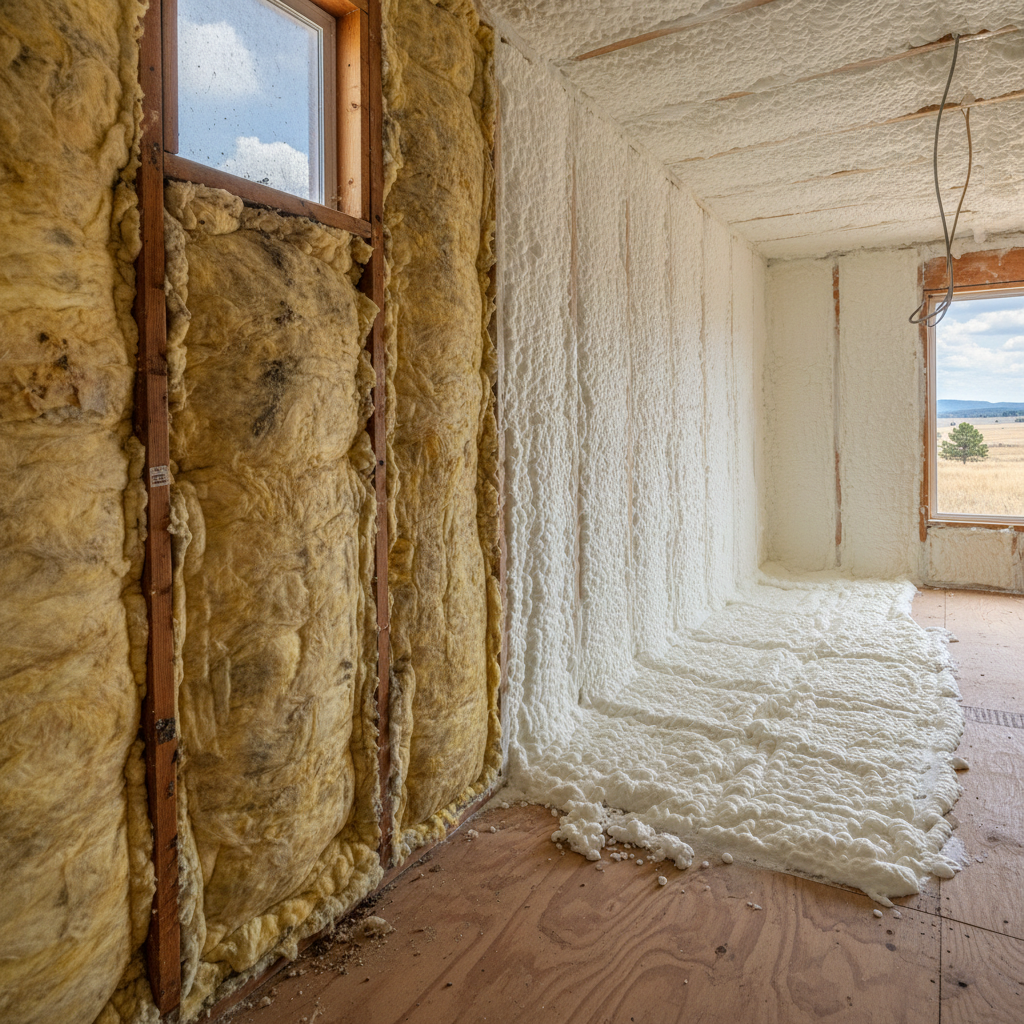
The full-fill method means spraying the open cell foam until it completely fills the wall or roof cavity flush with the framing studs. You get maximum R-value per inch and exceptional sound dampening. On the flip side, a hybrid or partial-fill approach—often called flash-and-batt—uses a couple of inches of open cell foam to seal up every tiny air crack, followed by traditional fiberglass or mineral wool batts to hit your target thermal value.
Cost and Upfront Investment
Budget matters for any home project. Full-fill open cell foam costs more upfront because you are buying a lot more material and paying for the specialized labor time to spray it deep. The hybrid approach saves some cash on material costs since cheaper batts fill out the rest of the cavity depth. But do not just look at the installation invoice. If you live out in one of the open subdivisions near Box Elder where winter winds push heating bills through the roof, that extra investment in full-fill foam usually pays you back quicker through energy savings.
Moisture Management and Local Weather
South Dakota weather brings extreme temperature swings, going from blistering summer heat down to bitter winter cold. Open cell foam is vapor-permeable, meaning it allows moisture to pass through rather than trapping it against your framing lumber. If moisture gets into your walls during a sudden spring thaw, full-fill open cell lets the assembly dry out much easier than a tightly sealed plastic vapor barrier would. However, because it absorbs moisture like a dense sponge if it gets directly wet, you have to make sure your exterior siding and roof deck are properly flashed and watertight.
Durability and Maintenance
Neither option requires much maintenance once the material is cured and trimmed behind your drywall. Open cell foam does not sag or settle over time the way loose-fill cellulose or cheap fiberglass batts can after years of structural vibration from nearby traffic or strong prairie gusts. Full-fill gives you a more rigid, monolithic blanket that stops convective air currents cold. If you choose the hybrid route, the batt portion inside can still slump eventually if it ever gets damp or was not friction-fitted tightly between the studs.
Making the Call for Your House
If you want the absolute tightest thermal envelope and quieter rooms facing the highway or open fields, spraying full-depth open cell is hard to beat. If you are watching your budget closely on a larger pole barn conversion or a big attic retrofit, a thinner application paired with high-performance batts gives you solid performance without maxing out your wallet. Majestic Insulation Company helps homeowners weigh these options carefully before making a final pick for homes in Box Elder, South Dakota.