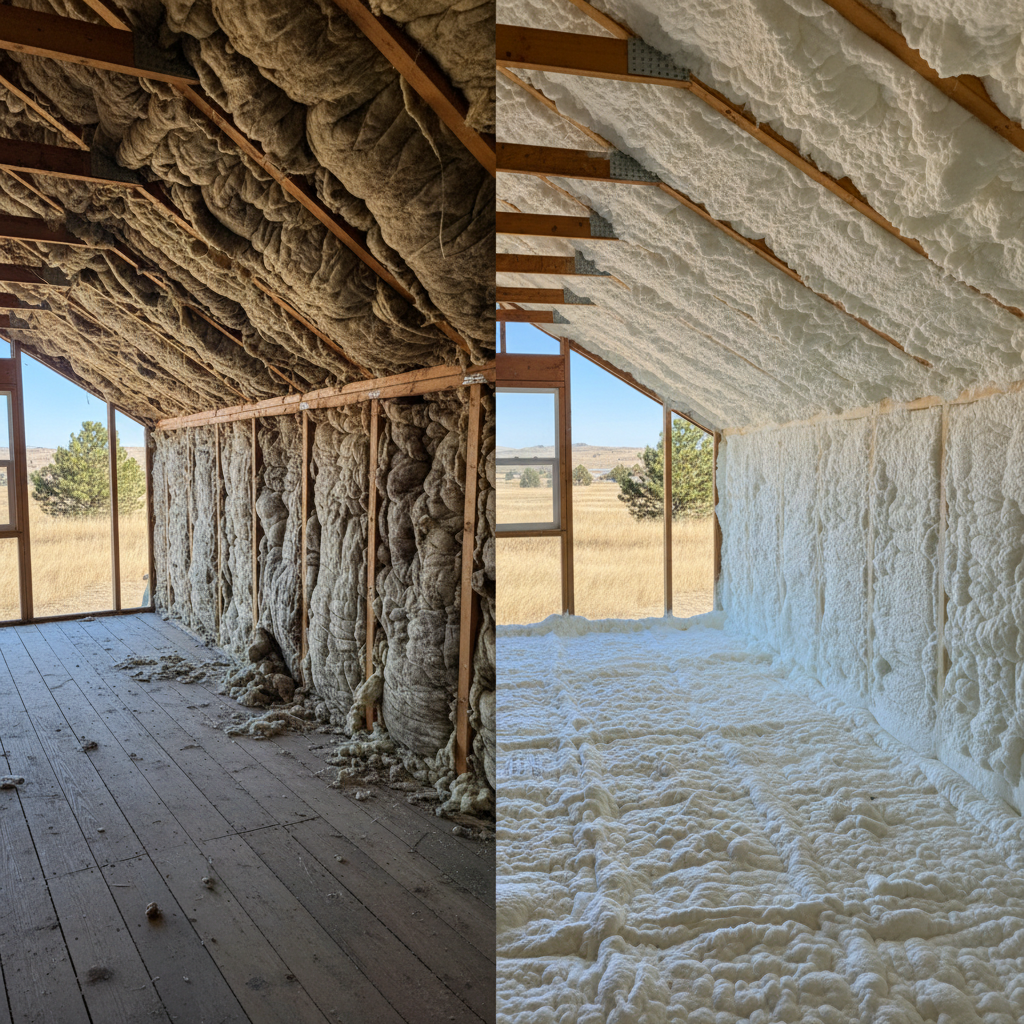
Alright, let's talk about open cell spray foam. It's a fantastic product, no doubt, especially for sealing up those drafts and keeping your energy bills in check around here in Box Elder. But when you decide to go with open cell, you've generally got two main ways to do it: flash and batt, or what we call "full fill." Homeowners often ask me which is better, and honestly, it depends a bit on your specific situation. I'm going to lay out the pros and cons of each, so you can make a truly informed decision for your Box Elder home.
Flash and Batt: The Hybrid Approach
Flash and batt is pretty much what it sounds like. We spray a thin layer of open cell foam, usually an inch or two thick, directly against the sheathing or subfloor. This foam expands and seals up all those tiny air leaks — the cracks, gaps, and penetrations that are an absolute nightmare for energy efficiency. After that thin layer cures, we come back and install traditional fiberglass or mineral wool batts right over the top, filling the rest of the cavity. It's a hybrid system, giving you the air-sealing benefits of spray foam with the cost-effectiveness of batts. A smart compromise, you might say.
Cost Considerations
Generally speaking, flash and batt is going to be less expensive upfront than a full fill open cell application. You're simply using less spray foam, which is the pricier material, and supplementing it with more affordable batt insulation. This can be a big draw for folks on a tighter budget who still want that superior air seal without completely breaking the bank. You really do get a lot of bang for your buck in terms of performance improvement for the cost.
Durability and Maintenance
Durability is pretty good with flash and batt. The spray foam layer adheres directly to the surface, so it's not going anywhere. The batts behind it are protected from air movement, which is usually what degrades their performance over time. Maintenance? Not much to speak of, honestly. Once it's in, it's in. You don't really need to touch it unless you're doing major renovations.
Appearance
Appearance isn't really a factor here since it's all hidden behind drywall or other finishes. The foam looks like, well, foam, and the batts look like batts. Nothing fancy, but it's not meant to be seen.
Full Fill Open Cell: The Complete Solution
With full fill open cell, we spray the foam directly into the entire cavity until it's completely, utterly filled. So, if you've got a 2x6 wall cavity, we're spraying six inches of open cell foam. This creates a monolithic, seamless layer of insulation and air sealing. There are no gaps, no voids, just a continuous barrier. Pretty impressive, right?
Cost Considerations
This is where full fill typically costs more. You're using a lot more spray foam to fill the entire cavity. So, if your budget is tight, this might be a tougher pill to swallow upfront. However, you're also getting a higher R-value per inch compared to batts, and a truly superior air seal throughout the entire cavity. Over the long term, those energy savings can really add up, especially with our hot summers and cold winters here in Box Elder.
Durability and Maintenance
Full fill open cell is incredibly durable. It adheres to everything it touches, creating a rigid yet flexible structure right there within the wall or ceiling cavity. It won't settle, sag, or degrade over time like some other insulation types can. Again, maintenance is virtually non-existent. It's a set-it-and-forget-it kind of insulation.
Appearance
Like flash and batt, appearance isn't a concern since it's covered up. The foam itself, when properly applied, expands to fill the cavity cleanly and then gets trimmed flush with the studs or joists.
Which One Should You Choose for Box Elder?
So, which approach is best for your home here in Box Elder? For me, working with homes all over the area, from the older places near Ellsworth Air Force Base to the newer builds out towards the foothills, I usually lean towards a full fill open cell application when the budget allows. Why?
- Superior Air Sealing: While flash and batt does a great job, full fill just can't be beaten for creating an absolutely airtight envelope. This is crucial in South Dakota, where temperature swings are extreme. You don't want any sneaky drafts getting in, do you?
- Moisture Management: Open cell foam is vapor permeable, meaning it can allow moisture to pass through it. In our climate, especially with the occasional heavy snow loads and freeze-thaw cycles, this can be a good thing. It allows any incidental moisture that might get into your wall cavity to dry out, preventing mold and rot. This is a big advantage over closed-cell foam in certain applications, and full fill maximizes this benefit.
- Acoustic Performance: Full fill open cell is fantastic for sound dampening. If you're near a busy road, or just want a quieter home, filling that entire cavity with foam really helps absorb sound.
- Long-Term Value: While the upfront cost is higher, the enhanced performance and durability of full fill often translate into greater long-term energy savings and overall comfort. It's an investment that pays dividends for years.
That's not to say flash and batt is bad — not at all. It's a solid choice if you're trying to balance cost with performance, and it's definitely a huge upgrade over just batts alone. But if you're looking for the absolute best performance open cell can offer, especially in those hard-to-reach spots or in a new build where you want maximum efficiency from day one, full fill is usually the way to go. Here at Majestic Insulation Company, we've done both plenty of times, and we're happy to walk through your specific project to figure out what makes the most sense for you. Give us a call, and we can chat about your options.