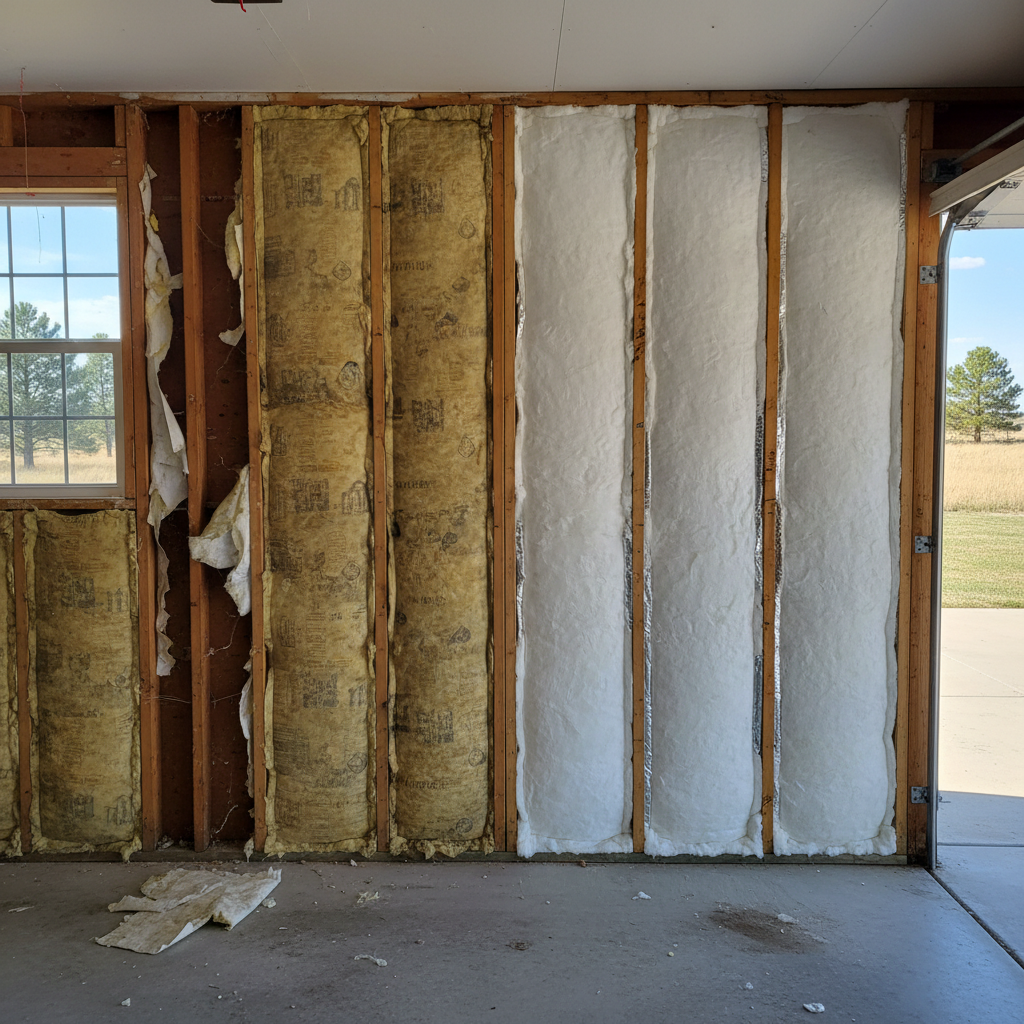
Alright, let's talk about insulating your garage. It's not just about keeping the car warm, though that's definitely a nice perk. A well-insulated garage can actually make a huge dent in your home's energy bill, especially if there's a room right above it or if you use the space as a workshop. Here in Box Elder, with our scorching summers and those truly brutal winter cold snaps, a solid garage insulation plan isn't just a good idea—it's essential. You've got a couple of main routes you can go, and today I want to compare two common ones: batt insulation and rigid foam board.
Batt Insulation: The Usual Suspect
When most folks think about insulation, they're probably picturing batt insulation. This is your classic fiberglass or mineral wool, usually in rolls or pre-cut pieces that you fit between studs. You'll find it in tons of homes, and for good reason.
Cost & Installation
Batts are generally the most budget-friendly option right off the bat. You can grab rolls or sheets pretty easily from any hardware store. Installation can be a DIY project if you're handy and remember to wear protective gear. You just cut it to size and friction-fit it between your wall studs or ceiling joists. It's pretty straightforward, but you absolutely have to make sure there are no gaps or compressed spots, because that really kills its effectiveness.
Durability & Maintenance
Once it's in, batt insulation holds up pretty well. It doesn't really fall apart much over time, unless it gets wet. And that's the big 'if' for garages, isn't it? If you've got any moisture issues—leaks, condensation, or even just high humidity—fiberglass can soak it right up. Once it's wet, it loses its R-value, can get moldy, and trust me, it's a real pain to dry out or replace. You don't really 'maintain' it; you just make sure it stays dry.
Appearance
You can't leave batt insulation exposed. It needs to be covered with drywall, plywood, or some other finish. So, if you're going for an unfinished garage look, this isn't the way to go. You'll have extra costs and labor for finishing those walls.
Rigid Foam Board: The Step Up
Rigid foam board, like expanded polystyrene (EPS), extruded polystyrene (XPS), or polyisocyanurate (polyiso), is another excellent choice. These are solid panels of insulation that come in various thicknesses and R-values.
Cost & Installation
Foam boards are usually more expensive per square foot than batts. The material itself costs more, and while installation can also be a DIY job, it needs careful cutting to fit snugly. Then you have to seal all the seams with tape or spray foam to prevent air leaks. This sealing step is crucial for getting the most out of it. If your garage is a bit older, maybe with some uneven framing, getting a perfect fit can be a little trickier.
Durability & Maintenance
This is where foam board really shines, especially for a garage. It's much more resistant to moisture than fiberglass. If it gets wet, it doesn't absorb water like a sponge; it just dries out. It's also more resistant to pests, which is a definite bonus in any outbuilding, right? It won't sag or settle over time, so its R-value stays consistent. You don't really 'maintain' it; you just install it correctly the first time.
Appearance
Some foam boards, especially those with a foil facing, can be left exposed if local codes allow. This can save you the cost and effort of finishing the walls. It gives a clean, industrial look that many people like for a garage. If you want a more finished look, you can still cover it with drywall, but you don't always have to.
Our Box Elder Recommendation
Given our specific conditions here in Box Elder—those extreme temperature swings, the potential for moisture in a garage (especially with melting snow off your car), and the general need for solid performance—I lean towards rigid foam board for garage insulation. Yes, it's a bit more expensive upfront, but the benefits often outweigh that initial cost.
- Better moisture resistance: This is a huge one. We get a lot of snow, and that means a lot of moisture coming into the garage. Foam board handles it way better.
- Higher R-value per inch: You can get more insulating power in a thinner profile, which is nice if space is tight.
- Air sealing: When installed correctly and sealed, foam board provides an excellent air barrier, which is just as important as the insulation itself for energy efficiency. Those cold winds whipping across the prairie? Foam board helps keep them out.
- Durability: It's just a tougher product for a high-traffic, sometimes damp, environment like a garage.
Now, if your budget is super tight, batt insulation is still a huge improvement over nothing. Just make sure you address any potential water leaks or condensation issues first. But if you can swing it, investing in rigid foam board for your garage walls and ceiling is going to give you better performance and peace of mind in the long run. It's a solid investment for your home's comfort and energy efficiency, and something we at Majestic Insulation Company see pay off for folks all the time.
Think about it like this: your garage works hard. Give it the insulation it deserves, and it'll work even harder for you.