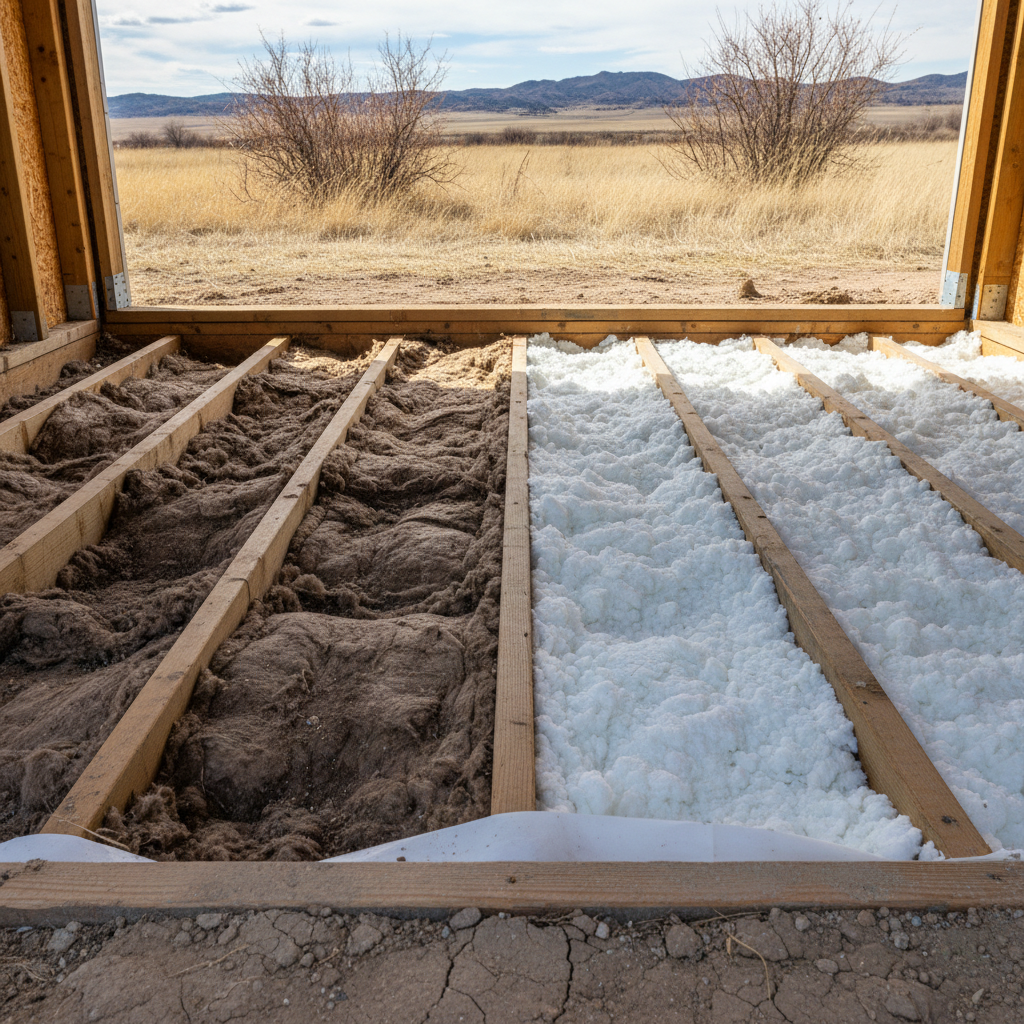
Crawl Space Insulation: Encapsulation vs. Traditional for Box Elder Homes
Your crawl space. Honestly, it's probably not something you think about much, until you notice a drafty floor, those energy bills creeping up, or even worse, a musty smell wafting into your living space. When it's time to insulate that often-forgotten area under your home, you've really got two main options: full encapsulation or what I'd call the 'old-school' approach. Let's break down both so you can figure out what makes the most sense for your Box Elder home.
Traditional Crawl Space Insulation: The Old Way
When I talk about traditional crawl space insulation, I'm usually thinking about insulating the subfloor (that's the floor joists right under your living space) with fiberglass batts. Sometimes, people also insulate the perimeter walls with rigid foam board or even more batts. The main idea here is to stop the heat in your living space from escaping down into the cold crawl space.
- Cost: Generally, this is the cheaper option upfront. Fiberglass batts don't cost much, and putting them in can be faster if you're just fitting them between joists.
- Durability: This is where things can get tricky. Fiberglass batts are basically sponges. If your crawl space gets damp – and let's be real, in Box Elder, with our heavy snowmelt and spring rains sometimes, dampness is a real possibility – those batts will soak up moisture. Once wet, they lose their insulating power, start to sag, fall out, and can even become a perfect spot for mold and mildew to grow. Definitely not what you want.
- Maintenance: You'll probably need to check on them now and then, especially after big rains or if you spot any moisture issues. Replacing fallen or moldy batts is a pretty common chore, unfortunately.
- Appearance: Well, it's a crawl space, so 'appearance' isn't usually high on anyone's priority list. But saggy, moldy batts look pretty bad and usually mean bigger problems are brewing.
Crawl Space Encapsulation: The Modern Approach
Encapsulation is a completely different ballgame. Instead of just insulating the floor above, you're basically sealing off and insulating the entire crawl space itself, making it a conditioned or semi-conditioned space. This usually involves a few key steps:
- Putting down a heavy-duty vapor barrier (typically 10-20 mil thick polyethylene) across the whole crawl space floor and up the walls, sealing it completely.
- Insulating the crawl space's perimeter walls, often using closed-cell spray foam or rigid foam boards.
- Sealing off all vents that lead outside.
- Adding a dehumidifier to keep moisture levels in check.
The whole point? To create a dry, clean, and stable environment right under your home.
- Cost: This definitely costs more upfront than traditional methods. You're looking at more material, more labor, and often the addition of a dehumidifier.
- Durability: This is where encapsulation really shines. The heavy vapor barrier protects against ground moisture, and the sealed walls stop outside air and moisture from getting in. This setup is built to last and handle the elements, even with our clay soils around Box Elder that can hold onto moisture for ages.
- Maintenance: Once it's done right, maintenance is pretty low. You'll want to check on your dehumidifier and empty it (or make sure it's draining okay) and maybe do a quick visual inspection every now and then. But you won't be dealing with falling insulation or moldy batts.
- Appearance: A properly encapsulated crawl space looks clean, bright, and dry. It's a much more pleasant space to access if you ever need to do plumbing or electrical work.
Which One Should You Choose for Your Box Elder Home?
Look, I've seen a lot of crawl spaces in my time with Majestic Insulation Company, and the traditional method with fiberglass batts almost always ends up causing problems down the road, especially in our climate. The moisture issues, the mold, the loss of insulating value – it's just not a long-term solution for a healthy, energy-efficient home, is it?
For most homeowners in Box Elder, I'm going to recommend crawl space encapsulation. Yes, it costs more initially, but you're really investing in the long-term health of your home. You'll get:
- Lower energy bills because you won't be fighting a cold, damp space under your house.
- Better indoor air quality – no more musty smells or mold spores making their way upstairs.
- A more comfortable home with warmer floors in winter.
- Protection against pests; they're just not as interested in a dry, sealed environment.
- Increased storage space, if you want it.
Think of it this way: you wouldn't leave your attic wide open to the elements, so why do it with your crawl space? Encapsulation takes that neglected area and makes it work for your home, not against it. It's an investment that pays dividends in comfort, health, and energy savings for years to come.